
Data Coding: A Smarter Approach to Qualitative Analysis in Human Factors Research
Imagine this: you’re running a 15-participant formative study. Each participant completes 20 tasks and shares subjective feedback. By the end, you’re looking at more than 2,000 individual data points. Add interview transcripts and observational notes, and the dataset expands exponentially.
In Human Factors (HF) research, that volume creates a risk that is easy to overlook: studies can collect rich data and still produce incomplete findings. The culprit is rarely the research design. It’s what happens, or doesn’t happen, between data collection and analysis. The more data there is, the harder it can become to identify meaningful patterns.
The Compounding Problem
Without a systematic framework, analysts often find themselves trapped in a cycle of re-reading responses, manually linking related insights across participants, and retracing their steps before themes can take shape. The effort required to manage the data starts to compete with the time available to interpret it.
But this isn’t just an efficiency problem. When analysis is rushed or incomplete, subtle but significant findings go unreported, and design teams move forward without the full picture.
One method that addresses this is data coding.

Repeatedly revisiting raw data slows analysis and makes the path to themes harder to trace
What is Data Coding?
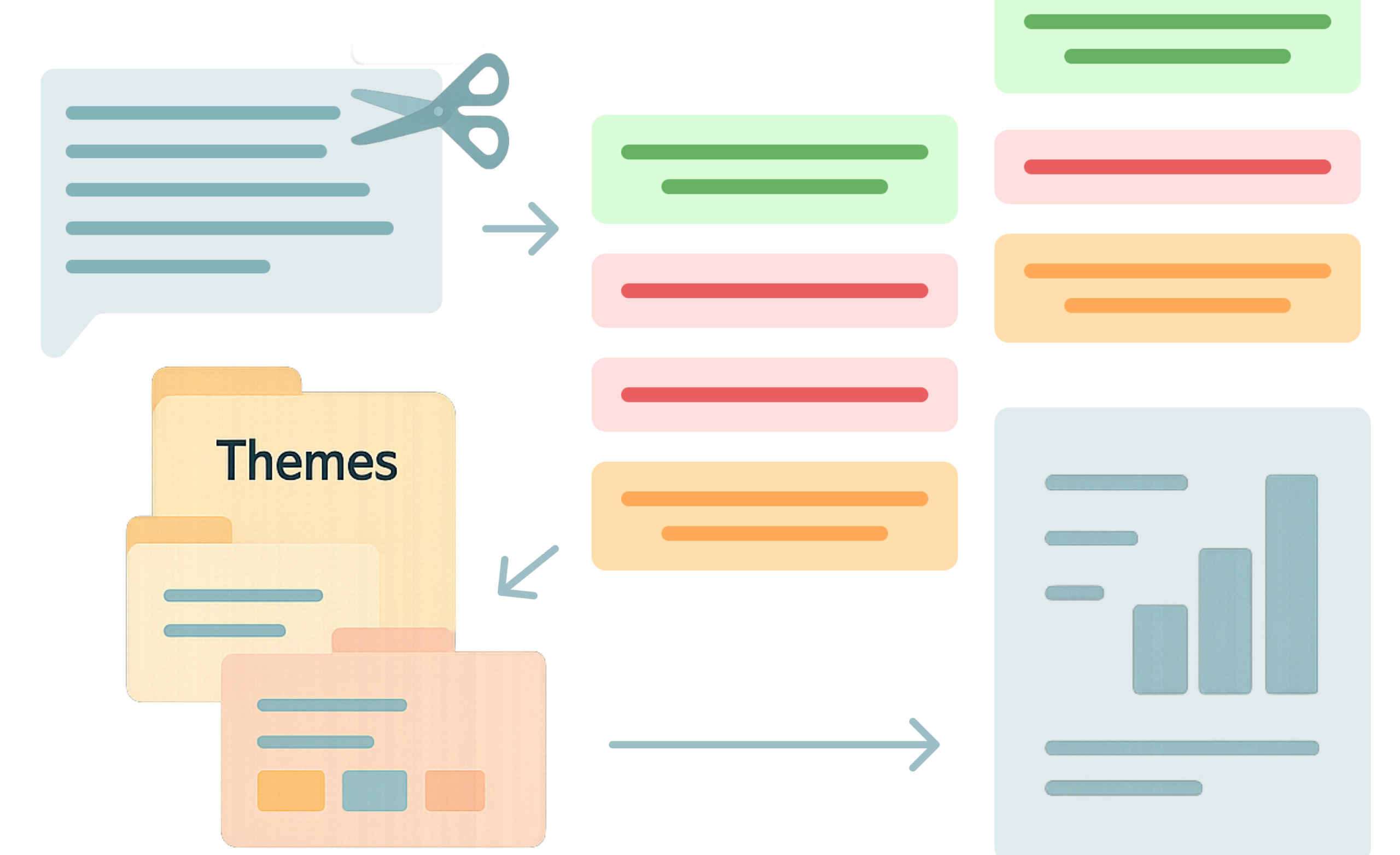
Data coding is the structured process of organizing qualitative data into defined categories so patterns can be systematically analyzed.
At its core, data coding involves:
- Segmentation: Breaking data into meaningful segments
- Labeling: Assigning “codes” that represent patterns, behaviors, errors, sentiments, or themes
- Thematic Grouping: Categorizing related codes into higher-level themes (e.g., “Insufficient Auditory Feedback”)
- Quantification: Counting occurrences when appropriate (e.g., turning “some users were confused by” into “4/15 of users stated…”)
The result is analysis that is faster to conduct, easier to defend, and harder to challenge. It transforms qualitative data from a collection of observations into a clear foundation for decision-making.
Data Coding in Action
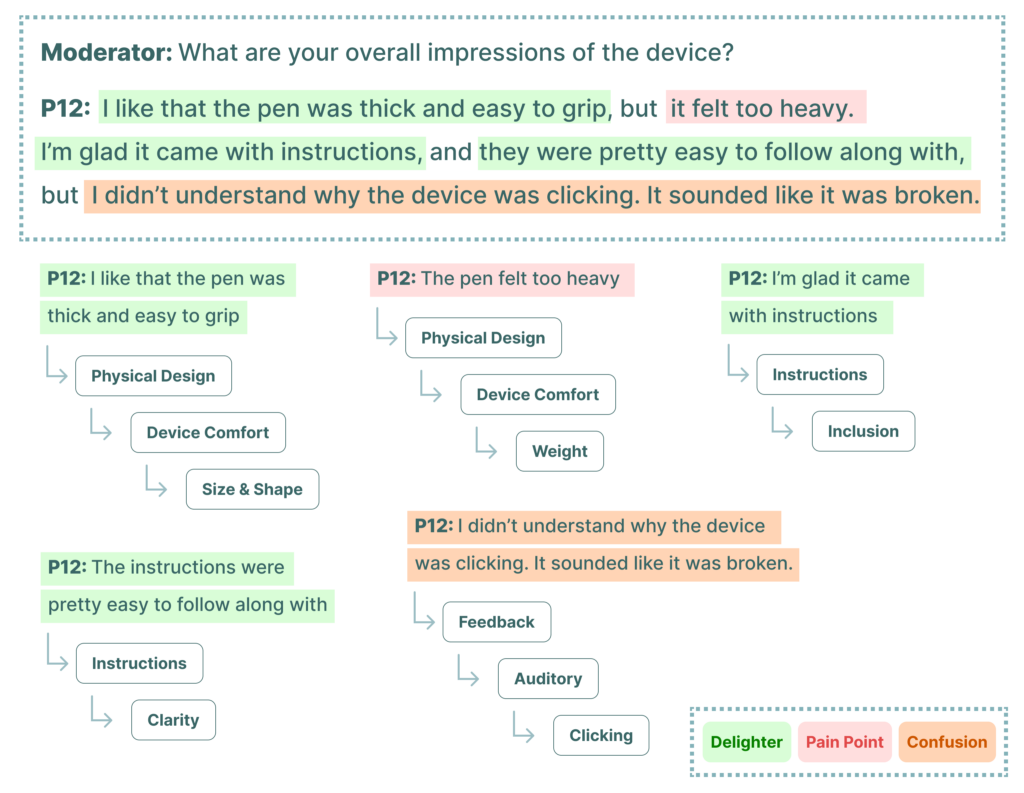
Imagine running a formative study evaluating patients’ experience with a new autoinjector pen. When asked, “What are your overall impressions of the device?” participants provide a wide range of feedback, commenting on grip comfort, injection time, and the auditory clicks the device makes.
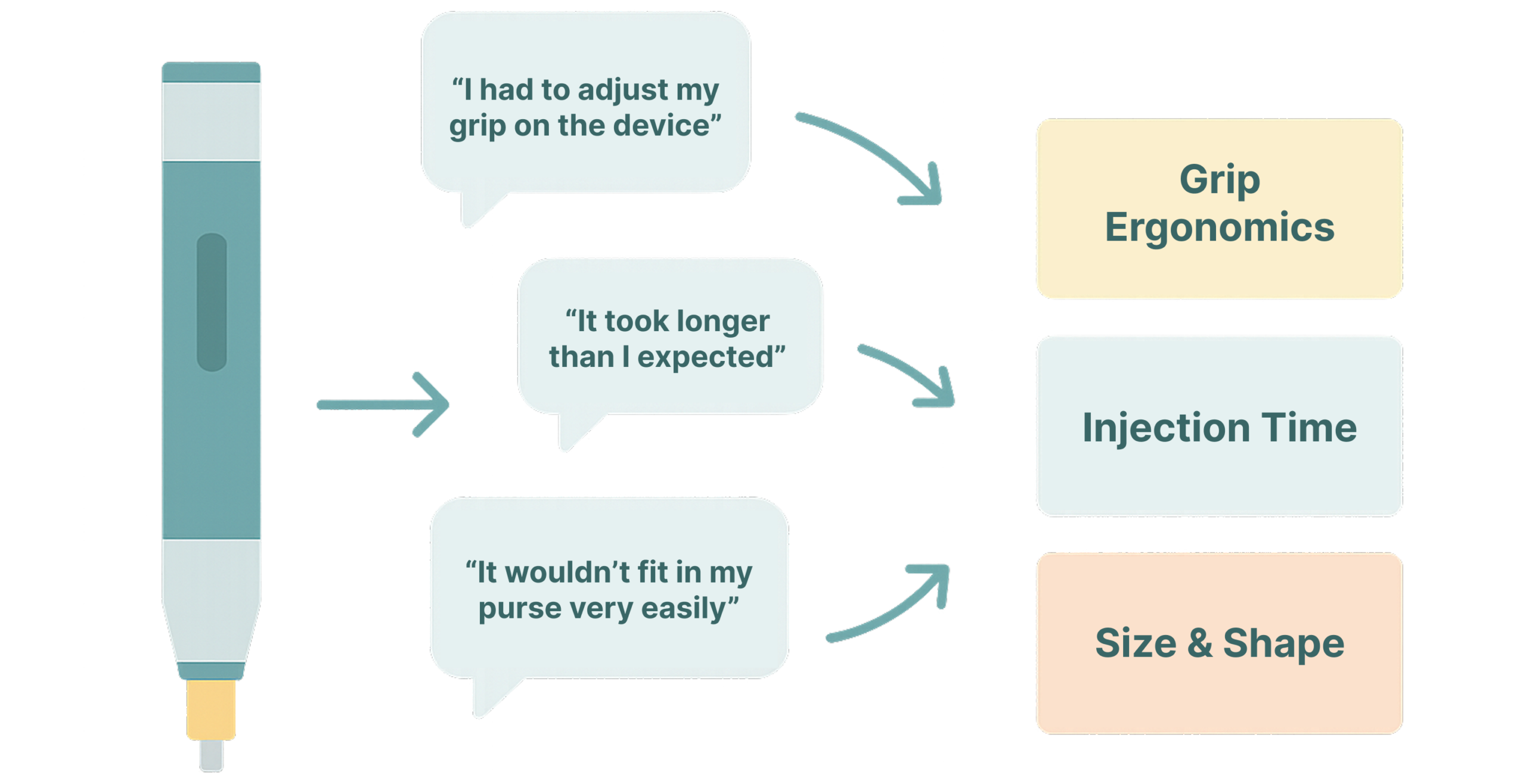
In a raw dataset, these are scattered comments, especially when they surface across multiple questions. Through data coding, each data point is assigned a specific label. A broader category like “device comfort” might include more specific codes like “weight” and “grip ergonomics.” Viewed across participants, clear trends begin to emerge.
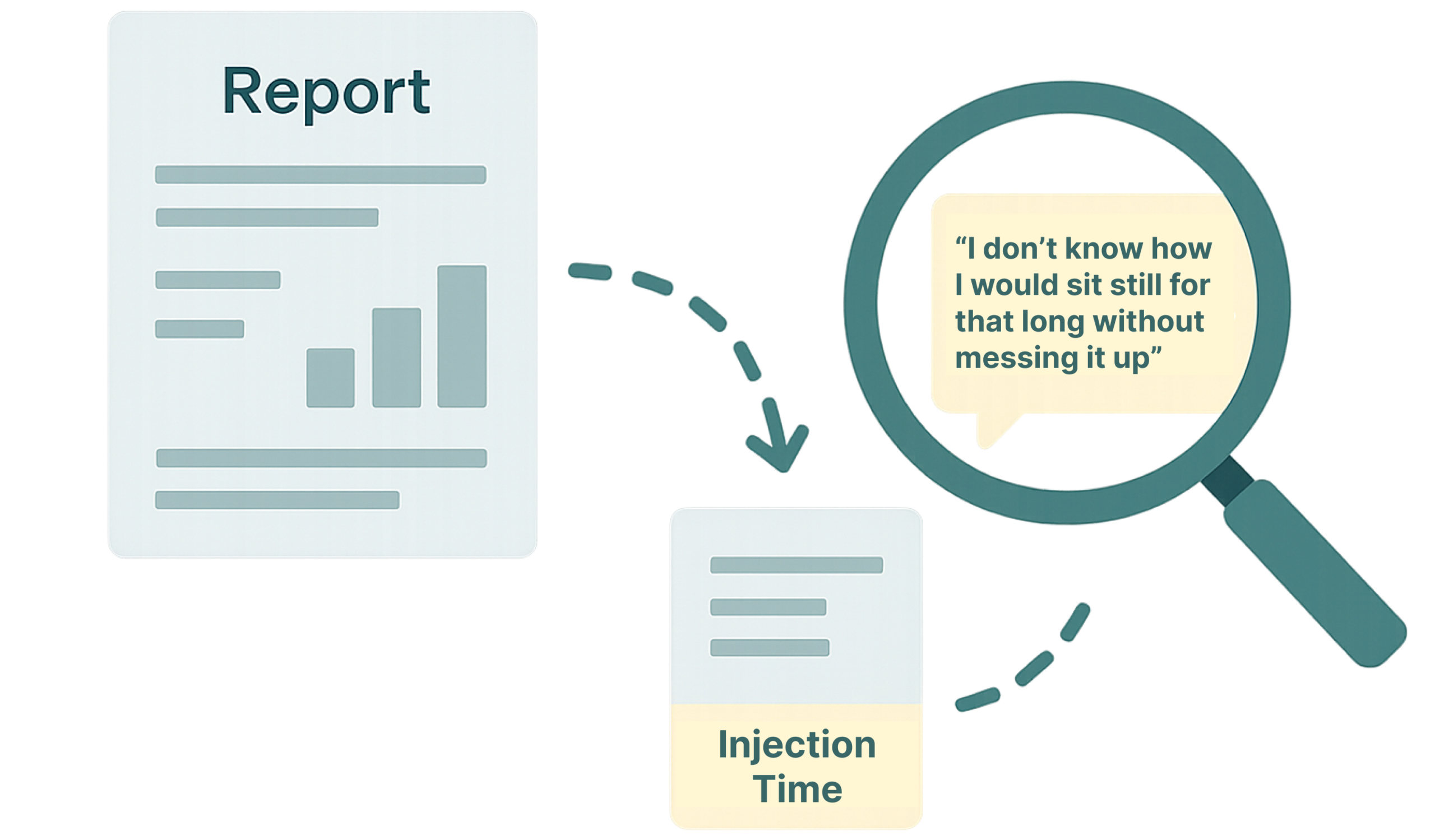
The final report then translates these codes into themes that inform actionable findings. For example, “Several participants expressed discomfort with the device, citing its bulkiness (4/15) and the length of time they would have to sit still to deliver the medication (3/15).”
That kind of finding does something a general impression cannot. It gives design teams the specific, frequency-supported evidence they need to prioritize changes before design decisions are finalized.
Formative research opens the window to act on early signals. Data coding helps ensure those signals don’t get missed.
Why Data Coding is Essential
Data coding solves persistent challenges that every HF analyst encounters.
Expanded Insight: Analysis is no longer constrained by the original research question. When data is organized by label rather than the question it answered, unexpected but significant patterns can surface, including ones the study wasn’t designed to find. For example, multiple instances of a pain point labeled “cap removal” across different questions may reveal an unanticipated accessibility issue for participants with reduced hand strength.
Rapid Theme Identification: Organized, labeled data is much faster to parse than a raw datasheet or transcript. When timelines are tight, this difference is felt directly in the quality of the analysis.
Transparent Reasoning: Qualitative data is inherently interpretive. Coding makes the analyst’s logic visible, so when a finding is questioned by a client, a designer, or a stakeholder, the reasoning behind it is clear and traceable.
Comprehensive Detection: Subtle but recurring issues are easy to overlook in unstructured data. Coding provides the granularity that allows those patterns to surface consistently.
In short: data coding transforms unstructured qualitative data into insight that is analyzable, traceable, and defensible.
Why Traceability Matters
One of the most valuable outcomes of coding is traceability: the ability to follow any finding back to each specific participant. When every insight is grounded in coded raw data, teams can act on findings and recommendations with confidence rather than faith.
In medical device development, this matters at every stage. When a design, engineering, or leadership team debates whether a usability issue warrants design changes, traceable data makes that conversation data-driven and faster to solve. When findings feed into broader design and risk documentation, the chain of evidence is already built.
Where Automation Fits In
Converting raw data into a structured, coding-ready format still takes time. Hours spent formatting and organizing data are hours not spent scrutinizing it. That manual preparation step can delay the start of analysis and add pressure to timelines that are already stretched.
Automation addresses this gap. By handling the initial segmentation of raw data, it allows analysts to begin coding almost immediately, without the front-end work that typically precedes it. Analysts can focus on coding, filtering, interpreting, and drawing conclusions.
Automation doesn’t replace analysts; it simply removes the hurdles that slow them down.

Our Approach
At Root Cause Insights, we’ve developed an internal workflow with automated segmentation of data from each participant comment, designed for the scale and complexity of HF research for medical devices.
In practice, this means analysis begins sooner, findings are directly traceable to source comments, and the gap between data collection and final report is used more fully. We’ve used this approach across studies ranging from early-stage concept evaluations to formative simulated-use studies, and the consistent result is that design teams receive cleaner, more actionable findings within the same timeframe as a traditional approach.
For our clients, that means faster turnaround and higher confidence in the insights guiding their product decisions. More than that, it means the data they worked hard to collect actually gets used in a way that holds up when decisions get scrutinized.
Conducting Human Factors research and data coding analysis helps trace findings to the person with arthritis who struggled with gripping a device, the person who wanted to discreetly store a medical device in their purse, and even the person who gets caught up in the busyness of their household when they need to sit still to deliver their medication.
These people show up in the data. Our job is to make sure their experiences show up in the report.
This article was written by Gianna Maaddi